
Why Are My Gums Bleeding? A Self-Diagnostic Report
Foreword: In clinical dentistry, bleeding gums are never a coincidence. They are a "silent alarm" from your body, signaling that your biological barrier is under threat. As your oral health consultant, we suggest you use this four-dimensional diagnostic card to find the root cause, rather than blindly switching toothbrushes.
Part I: The Self-Diagnostic Checklist
Check the symptoms that apply to you:
Dimension A: Physical Accumulation (The Calculus Check)
You see hard, yellowish or brownish deposits near the gum line that won't brush away.
Your tongue feels a rough, uneven texture on the back of your teeth.
Your gums look red and swollen even immediately after brushing.
Dimension B: Kinetic Deviation (The Brushing Habit Check)
You use a horizontal "sawing" motion (back and forth) while brushing.
Bleeding is concentrated at the "neck" of the tooth (where the tooth meets the gum).
You notice V-shaped notches (recession) or grooves at the base of your teeth.
Dimension C: Bacterial Load (The Periodontal Environment Check)
You rarely or never use dental floss or interdental brushes.
Your gums appear dusky red or deep purple, with a shiny, swollen texture.
You experience persistent bad breath (a byproduct of periodontal bacteria).
Dimension D: Systemic Threshold (The Immunity Check)
You are currently under high stress, losing sleep, or feeling exhausted.
Your diet is high in sugar/spice and low in fresh fruits and vegetables.
(For Women) You are currently going through hormonal shifts (period or pregnancy).
Part II: Clinical Analysis — Why Is This Happening?
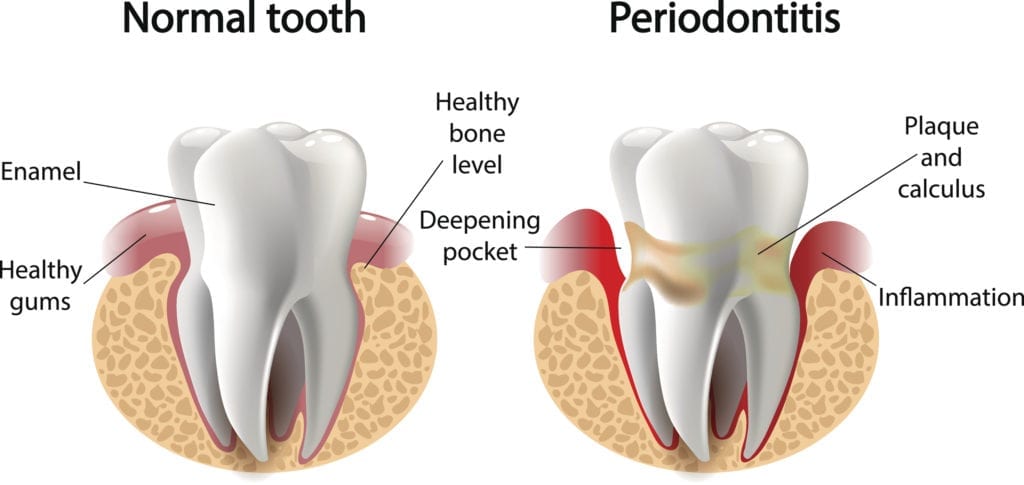
1. Dental Calculus: The "Sandpaper" You Can’t Brush Away
Consultant's Note: If you checked Dimension A, you have mineralized plaque (calculus). It is as hard as rock and as rough as sandpaper, physically cutting the delicate capillaries in your gums.
The Truth: No toothbrush can remove calculus.
It acts as a fortress for bacteria and requires professional intervention.
2. Horizontal Scrubbing: Mechanical "Trauma"
Consultant's Note: If you checked Dimension B, the bleeding is likely mechanical. The tissue connecting your gums to your teeth is fragile; horizontal friction strips this connection away.
The Truth: Horizontal scrubbing leads to Wedge-Shaped Defects (permanent grooves in your teeth) and chronic recession. 
3. Plaque Stasis: Defensive Vascular Dilation
Consultant's Note: If you checked Dimension C, the bacterial load in your Sulcus (the pocket between tooth and gum) is too high.
The Truth: Your body sends more blood to the area to fight bacteria, causing the tissue to become "engorged" like a soaked sponge. This is why gums look shiny and purple—it is a sign of oxygen-depleted blood pooling in the tissue.
4. The "Internal Heat" Myth: Immune Barrier Collapse
Consultant's Note: Dimension D refers to systemic triggers.
The Truth: Stress and lack of sleep raise cortisol levels, which weakens your gums' ability to repair themselves. This allows dormant bacteria to trigger an "acute flare-up" of inflammation.
Part III: Actionable Guidance — Your Step-by-Step Recovery
As your consultant, I recommend this progressive care plan:
Step 1: Clinical Intervention (For Dimension A)
Book a Professional Scaling (Cleaning). You must clear the "bacterial warehouse" first to give your gums the physical space to heal.
Step 2: Kinetic Reset (For Dimensions B & C)
Stop the horizontal sawing. Switch to the Bass Method. If manual brushing is too difficult to master, look for tools that automate Vertical Sweeping.
Sweeping along the grain of the teeth removes bacteria from the sulcus without "sawing" into the inflamed tissue.
Step 3: Systemic Support (For Dimension D)
Increase Vitamin C intake, stay hydrated, and ensure 7+ hours of sleep.
During an immune "low point," avoid high-frequency vibration that can irritate sensitive membranes. Use gentle, mechanical sweeping instead.
Bleeding is a request for help, not a reason to stop cleaning. Direction matters more than force. If you have specific symptoms, feel free to reach out for a deeper consultation.